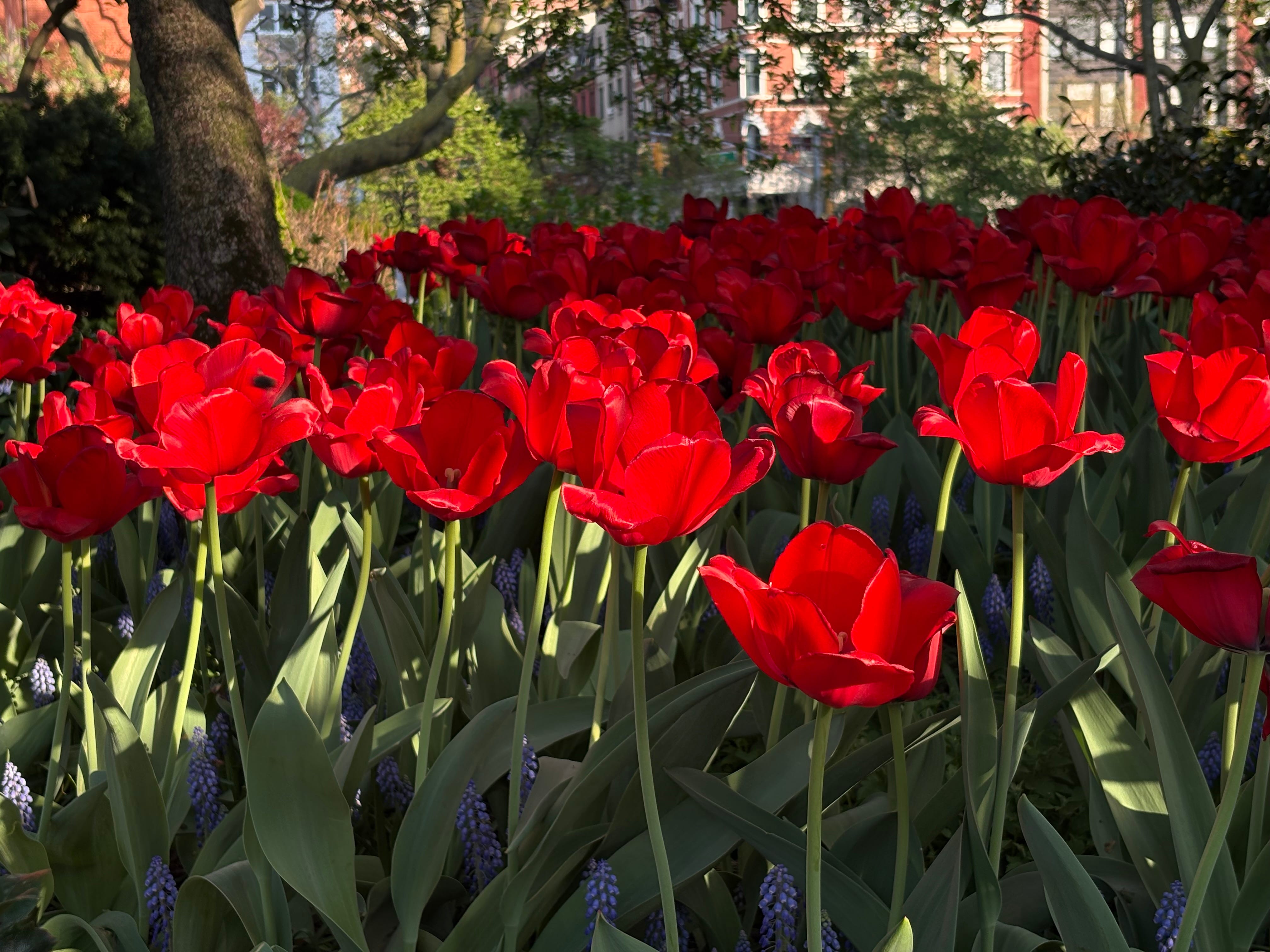
A Poem I Love
“Praising Spring” by Linda Gregg

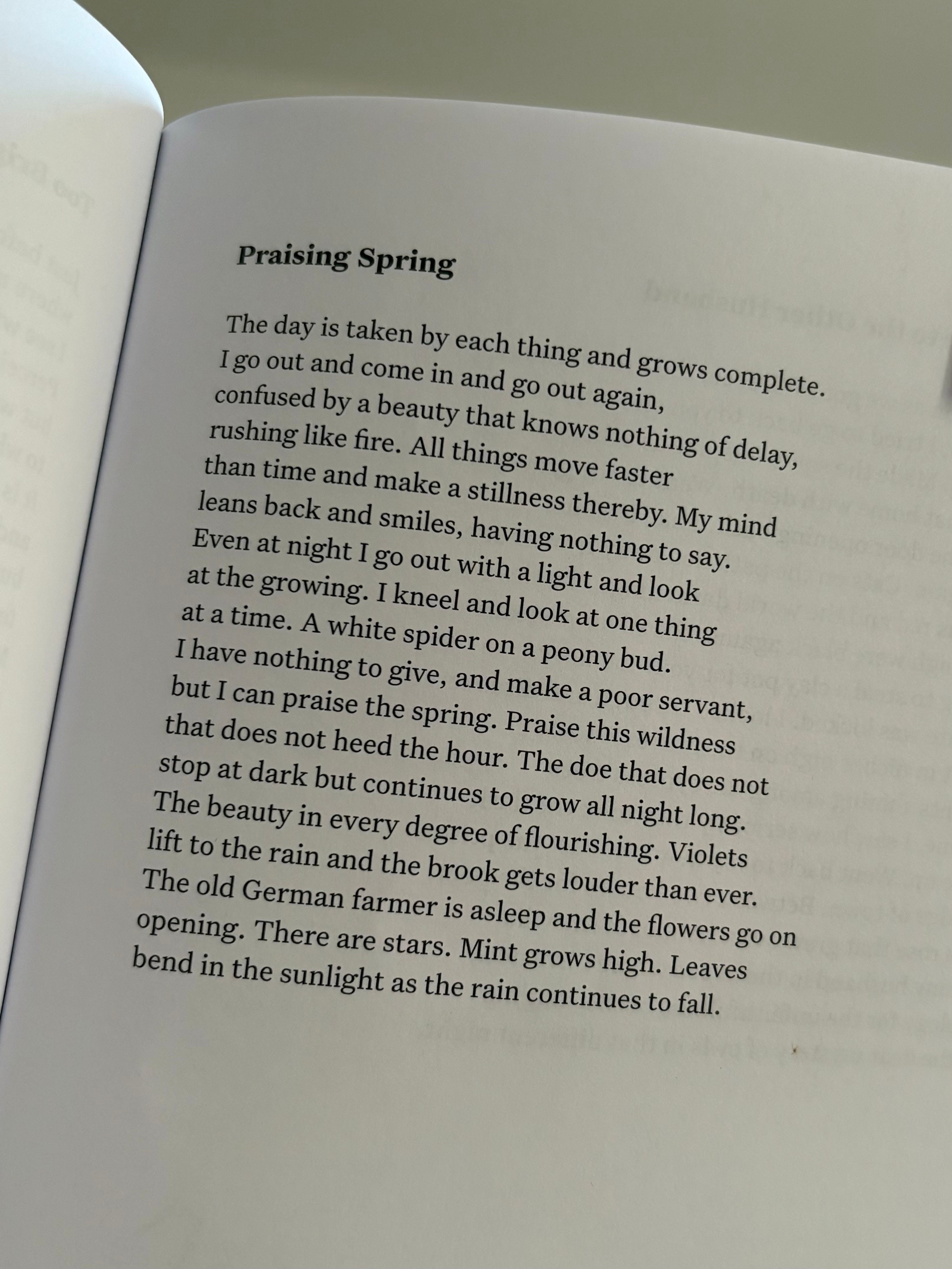
I love love love this poem and was delighted to find it featured in the April edition of Poetry Magazine along with several other poems by Gregg. She is a poet I am always meaning to read more of, and in “Praising Spring,” it seems she is at her very best.
As suggested by the title it is a celebration of the beauty of spring. It arrives every year a miracle. But there is also a more sinister undertone that balances the poem and makes it true. The best poems are true. Even in the opening line, Gregg introduces the idea of this double feeling: “The day is taken by each thing.” Is the day delighted by the blooming world around it, or does each thing (those later described: the spider, the flower, the doe, the running brook) claim the day for itself?
She expands on both possible meanings simultaneously. She is certainly taken by each thing, kicked into a frenzied and compulsive movement, out, in, out again, finding herself out even in the dark of night to witness what she describes as “a beauty that knows nothing of delay.” In this world defined by incredible speed, each of us is forced out of our heads into the moment, as Gregg says, the mind “leans back and smiles, having nothing to say.”
In our best moments, our minds have nothing to say, and the coming of spring in all its glory can catch even the most active mind off guard. However, there is a piece of this poem, a piece of Gregg’s quiet mind, that remains keenly aware of the passage of time. Small performances of life and death take place all around us and very quickly during spring. The flowers bloom only so an hour, the doe becomes a deer. Gregg is awestruck (both amazed and terrified) by a growth and “wildness / that does not heed the hour.” It will stop for no one, no thing, not even the coming of night—and all that night’s darkness may represent.
Faced with such beauty and such power, Gregg acknowledges herself as a servant and sings her praises. It’s a song of wonder and a song of humble tribute to something uncontrollable. In the closing line, it begins to rain in her spring—rain, being a quintessential springtime image, representing both birth and destruction, has not been mentioned until now. We see it nourishing the flowers and filling the brook to near overflowing. There is an old farmer sleeping while his flowers open into life, there are stars to remind us of our smallness, there is mint, fresh, bright, and liable to take over your herb patch if its not contained. In spring there is room for all of it, the rain continues to fall, but the sun shines through.