
Last Month's Reads
February 2026

I’m starting to sound like a broken record, but I’m only reading books I already own this year, etc., etc., and it’s going great, etc., etc. Obviously it’s only been two months, so there’s still time for me to sour on the whole enterprise, but I’m happy to report that things are still sweet, etc., etc.
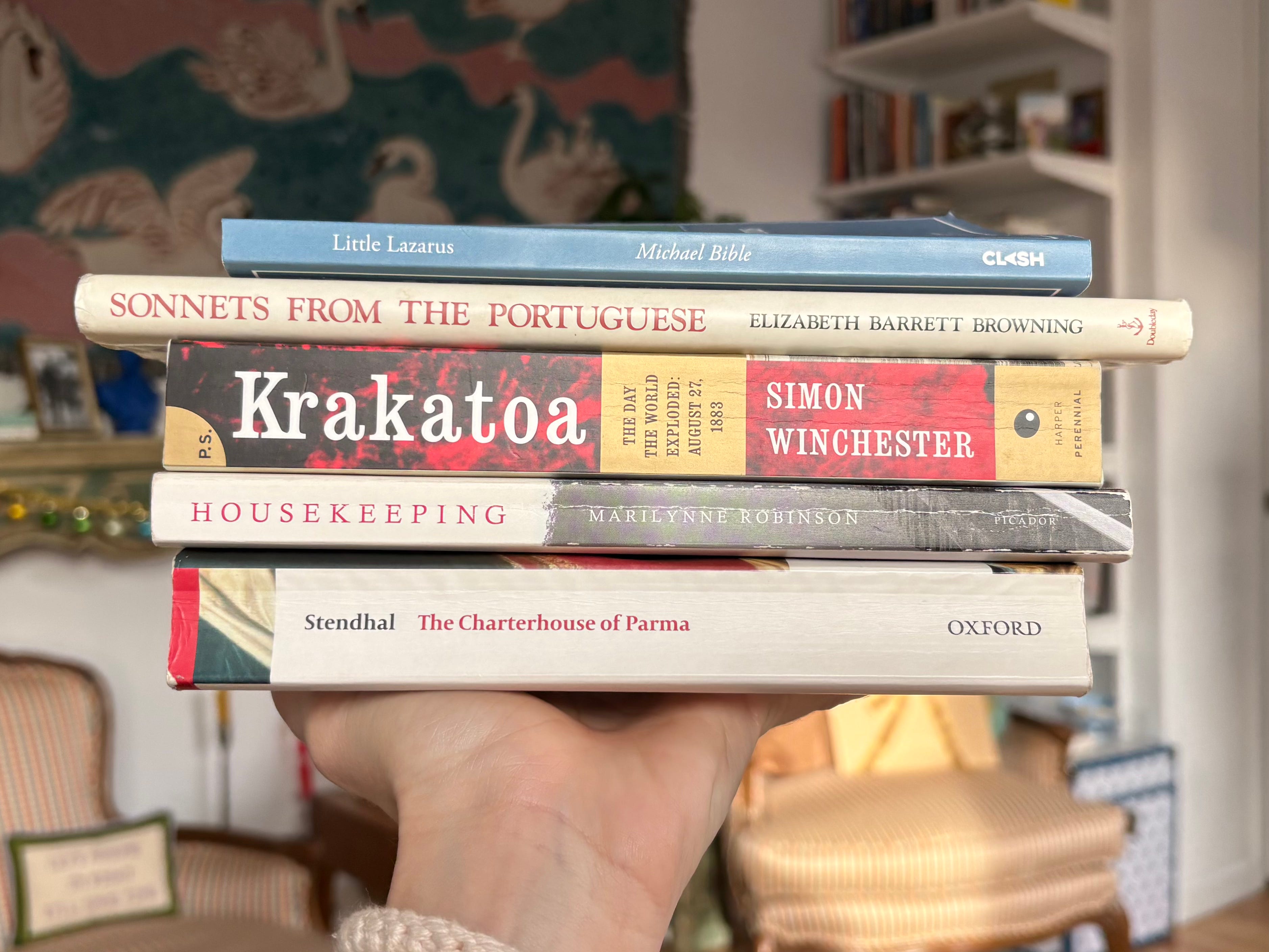
At the end of January,1 I finished Washington Square, and felt drawn to something a bit more contemporary. I thought it would be wise to also start the shortest month with a short book, so as not to nosedive from eight books in January to one book in February. I have a section of my shelf dedicated to skinny little spines, and I picked out Little Lazarus by Michael Bible. I picked it because a couple weeks ago I read a short story by Bud Smith, googled Bud Smith, found his Instagram (on browser), and saw that he was teaching a workshop with Michael Bible. I thought Little Lazarus might be good since I think Bud Smith is good, and Bud Smith obviously thinks Michael Bible is good, or at least is friends with him. I also think I bought it off the staff picks table at Three Lives, which will always be good enough for me.
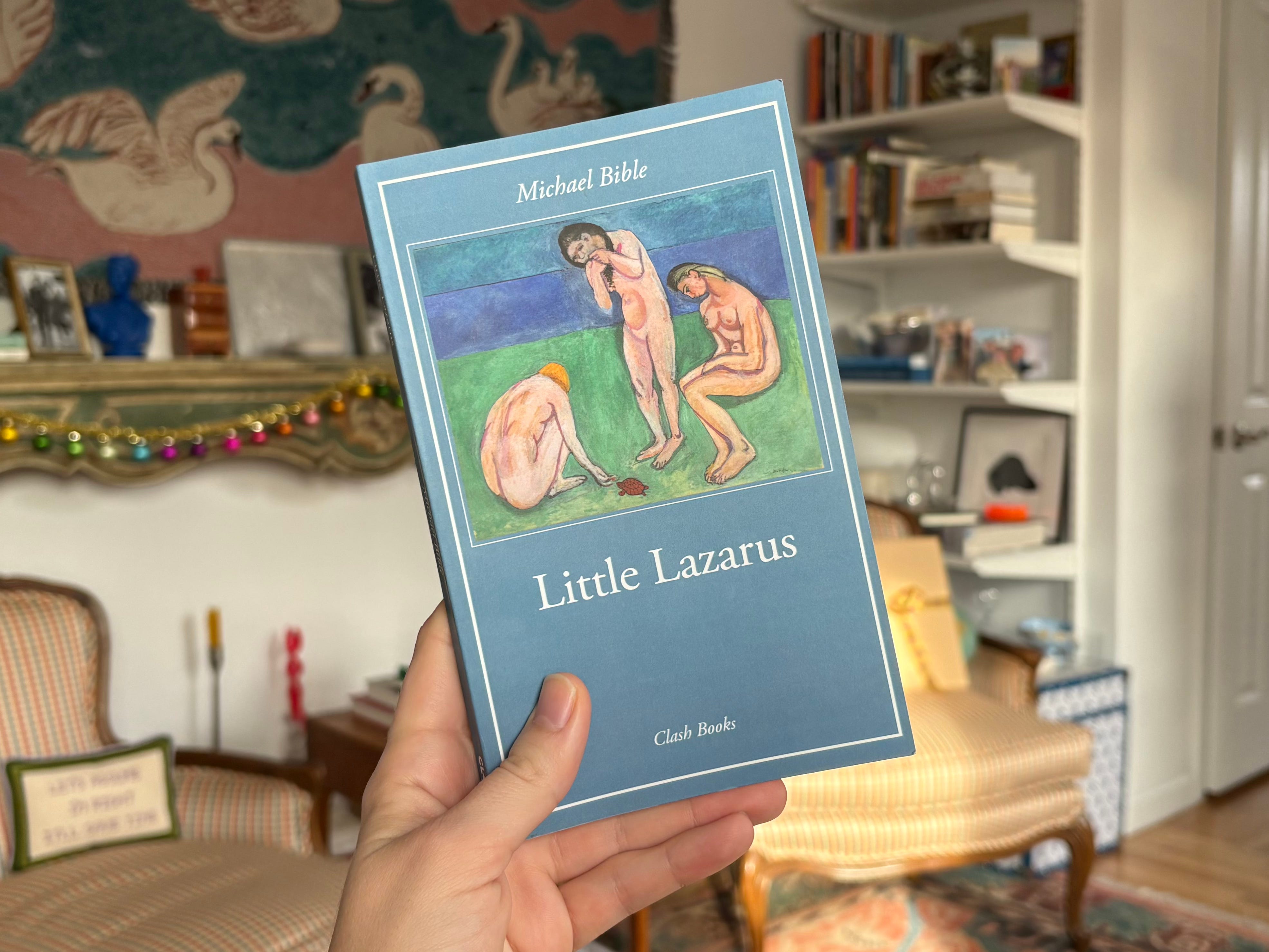
Well, turns out Little Lazarus is good but is also a really very strange book, and I think I’ll have to read it again to really get a grip on it, which I’d be glad to do. Ostensibly, it is the story of two teenagers—Francois and Eleanor. Don’t let their French names fool you—they live in Harmony, North Carolina. Also in Harmony is a man in a seersucker suit who does not speak, and his clairvoyant giant tortoise, Lazarus, who answers yes or no questions on a small chalkboard. On a vacation in New York City, Eleanor acquires a little tortoise herself, and names him Little Lazarus. One fateful evening, these characters collide (except for Little Lazarus who is at home in a shoe box), and everything changes.
The story is told in five parts, beginning with an overture, and then a section for each of our central characters—Francois, Lazarus, Eleanor and Little Lazarus, in that order. It is a jumpy book, full of tangents, misdirection and fabricated narratives carried out to their complete conclusions. Lazarus’s advanced age allows Bible to stretch his story some hundred and fifty years back in time. But why stop there, at the preposterously long lifespan of his be-shelled fortune teller? Bible stretches even further, and he does not hide from the reader what feats of imagination will be required of them. He begins: “Envision the past. The thunderclap of everything beginning and all the pain and poetry that follows.” No spoilers, but the book wraps up nicely with the end of the world.
Francois and Eleanor are simultaneously a blip on the timeline and all important actors in the destiny of the universe. Bible makes this dichotomy, by which all of our lives are defined, come to life. As a matter of personal preference, I found the moments in which Bible leaned into ultra-specificity (of which there were plenty!) to be more compelling than some of his broad, sweeping strokes. Broad, sweeping strokes are difficult to execute well, and I will excuse the silly, wizard-like vibe of some of his narrative interjections since I understand what he was trying to achieve through them.
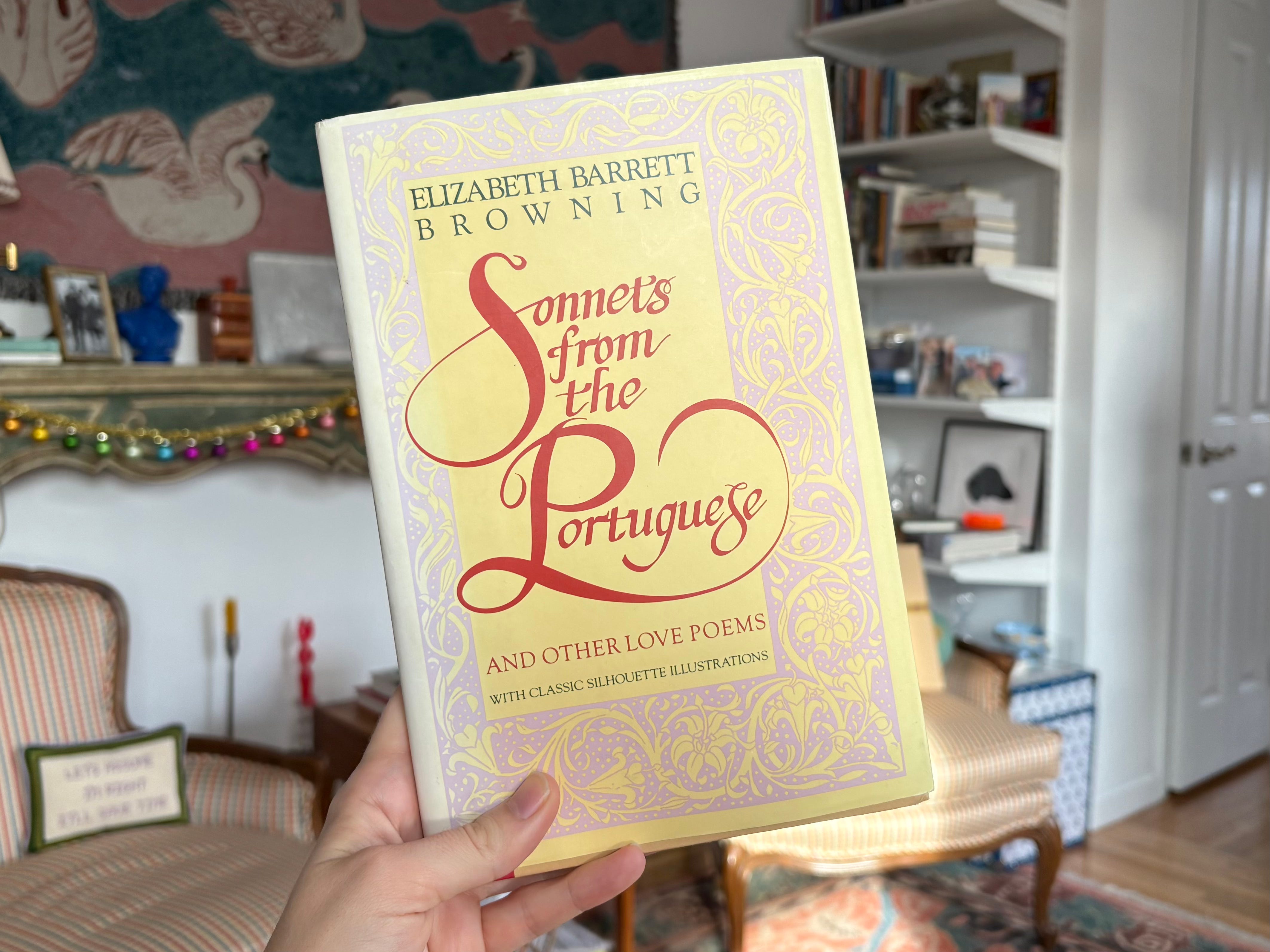
After Little Lazarus, I did something I literally never do and started reading three different books at the once. The first of those was Sonnets From the Portuguese by Elizabeth Barrett Browning. I bought my edition at the Big Chicken Barn in Ellsworth, Maine (a magical & overwhelming place), and it also includes Other Love Poems. I decided to read it because Valentine’s Day was fast approaching and I love love. I wrote about it, and one of my favorite poems from within it, here. TLDR: read more poetry, more sonnets if possible, and read them out loud.
At the same time, I decided I might as well try to chip away at my shelf of languishing nonfiction by reading one of the most recently acquired (and thus least languishing) titles thereupon. Krakatoa: The Day the World Exploded by Simon Winchester was a Christmas present from my sister’s lover, John. He knows that I love volcanoes2 for their sheer destructive potential, and identified Krakatoa as a deeply destructive volcano that I should probably know about. He couldn’t have been more correct!
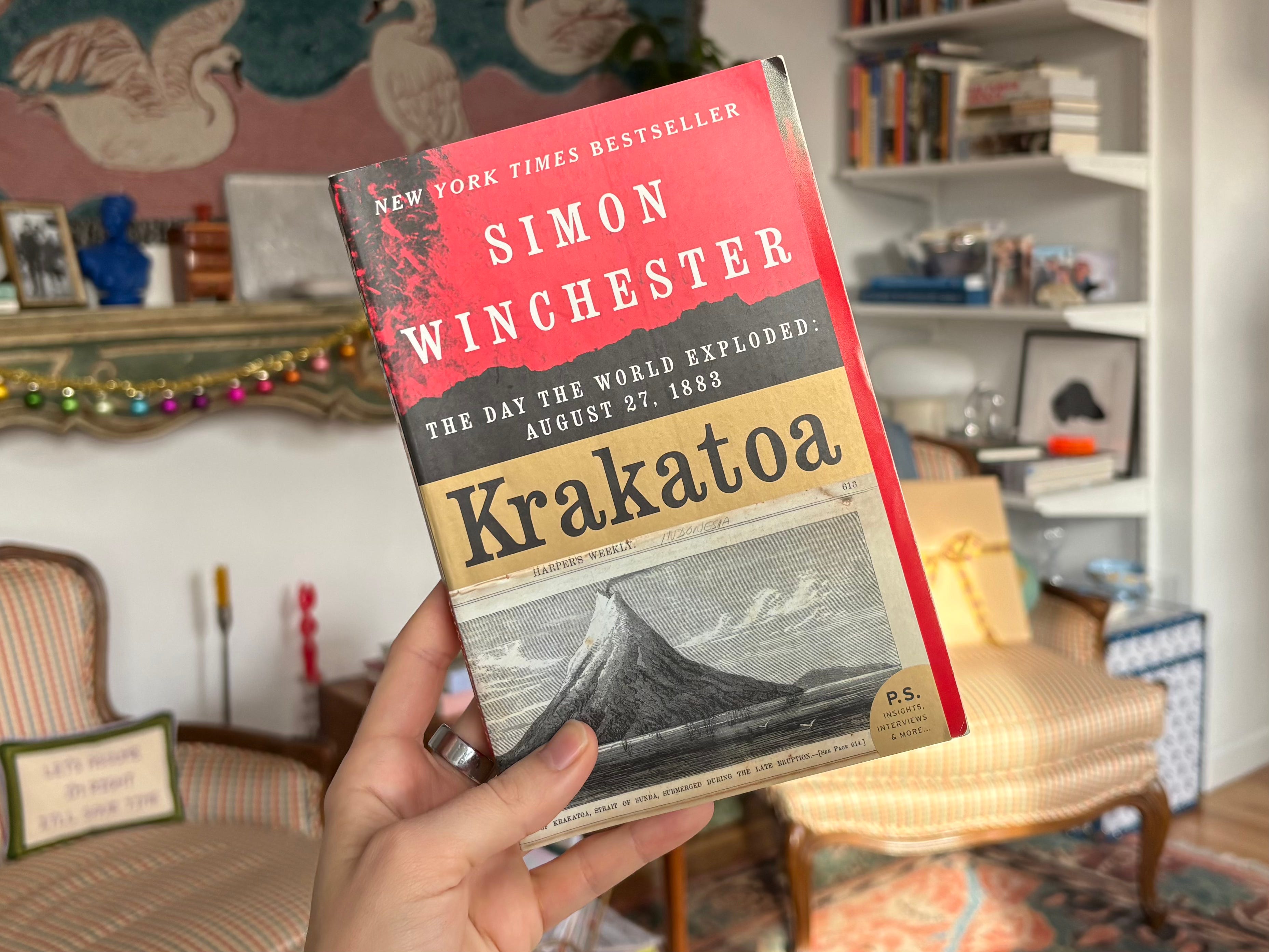
On August 27, 1883, Krakatoa, an island volcano in the heart of the Dutch East Indies, now Indonesia, erupted. The eruption was so violent that it not only blew clouds of ash and rock some thirty miles into the atmosphere, but also blew up its source (itself). After the smoke had cleared, the imposing island known as Krakatoa that once sat in middle of the Sunda Strait was simply no longer there. The sound of that great final explosion was heard 3,000 miles away, which would be like hearing an explosion in San Francisco from Philadelphia.
Though some were killed more directly by the explosion, it was the three tsunamis that followed that killed close to 40,000 people. In the weeks after the eruption, the cloud of ash spreading through the stratosphere started creating striking sunsets, which continued through 1886, and of which there is much documentary evidence. In Poughkeepsie, NY the volunteer firefighters noticed a red glow on the horizon and rushed off to fight a fire, which was in fact the setting sun. The temperature dropped globally by an average of one degree Fahrenheit in the year that followed.
Most insane of all? In the place where Krakatoa once existed, there now presides a new mountain island (read: volcano): Anak Krakatoa, or “Child of Krakatoa,” which is almost constantly erupting, building steadily upon itself, and which one day will likely meet (mete out) the same fate as its ancestor.
I cannot stress how riveting I found this book. Winchester leaves no stone unturned and goes to great lengths to link seemingly disparate events at and around the time of the Krakatoa eruption. He weaves together the geopolitics and the plate tectonics with no dearth of first-hand accounts and primary sources. I feel smarter than I was before I read it, yet no greater prepared for a catastrophic volcanic eruption, which is exactly how I want to be (because what’s the point).
The third book I was reading through the middle of the month was Housekeeping by Marilynne Robinson. If memory serves, I bought it at the Strand a couple years ago because my friend Robbie Huffines told me Robinson was great. Housekeeping is her first novel, and I always like to start at the beginning. Then the other week, I was perusing Jessie Lethaby’s Top Reads of 2025 and she mentioned it as a favorite re-read of the year, and what’s more, as a book she couldn’t live without!
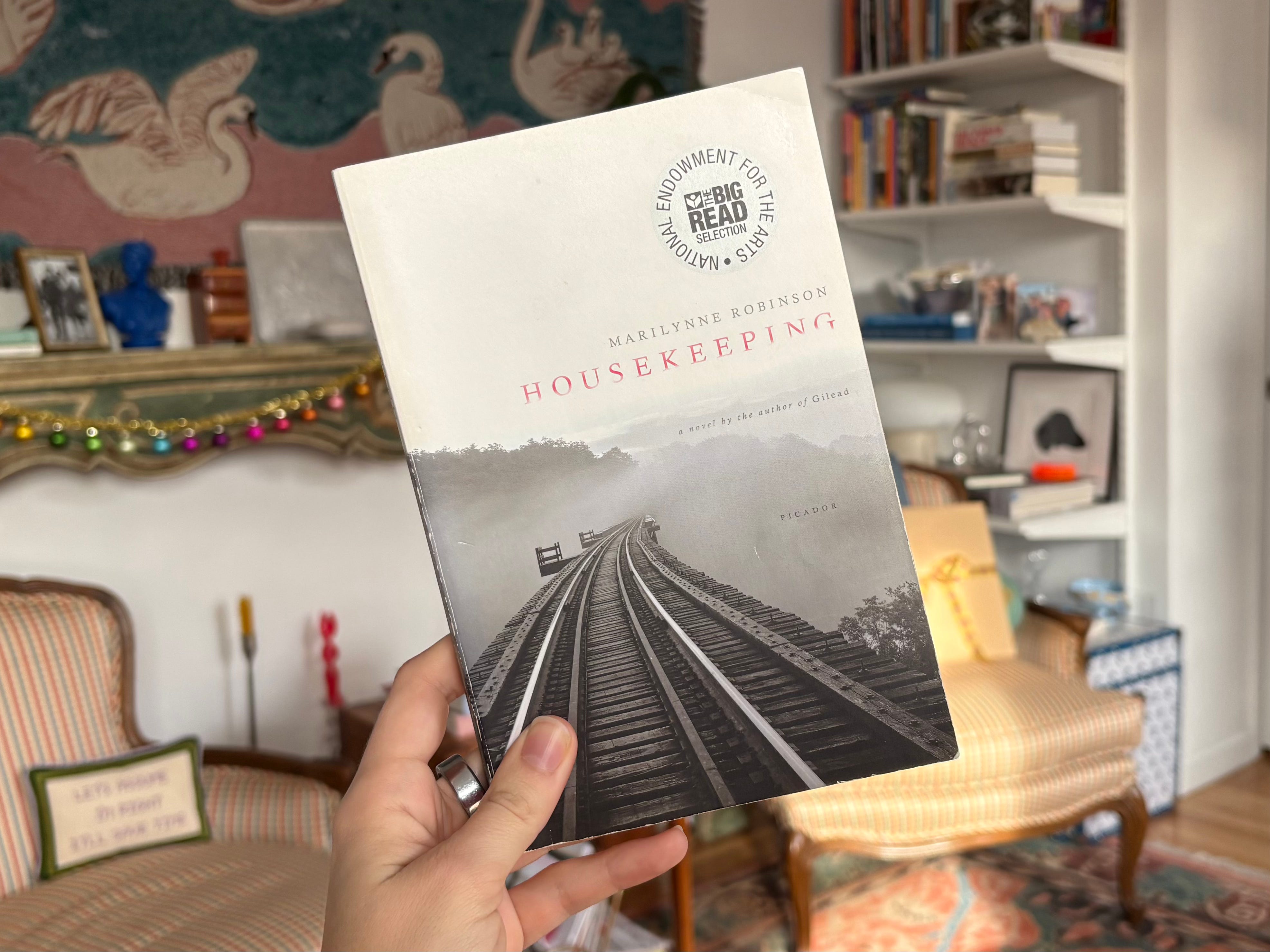
The novel centers on the Foster family, and begins by telling you how they ended up where they are, which is a fictional Idaho town called Fingerbone. Edmund Foster settled there when a west-bound train put him down there, and there he built a home for his wife, Sylvia. They had three daughters, Molly, Helen and Sylvie, whose childhood was sweet, but who through various acts of abandonment, became a source of sorrow to their mother. Years on, Helen drops her own two daughters, Ruth and Lucille, off on her mother’s porch before driving a borrowed car into the lake. These events are related by Ruth, who is our narrator, in a style that is both mythic and dispassionate. When Sylvia dies, Sylvie is called home from her life as a transient to care for Ruth and Lucille.
She is an untraditional caregiver in that she often vanishes in the night (a habit that’s startling to the girls at first), collects newspapers and coffee cans, and does not seem to mind if her charges skip school for whole months at a time. While Ruth recognizes that Sylvie is not like the other people in town, she doesn’t hold it against her—Ruth doesn’t feel that she fits in either, and doesn’t mind if all of Fingerbone is talking about how strange things seem to be over at the Foster house. Lucille and Ruth are inseparable in body and mind for the first half of the novel, but around the mid-point, a rift opens. Lucille does not want to be odd, Lucille wants to be normal.
From this point, Robinson veers somewhat off the path, or at least onto another path. The traditional narrative, coming of age story vanishes with the melting snow. Lucille chooses to pursue a conventional life, but that course of action doesn’t seem to be an option for Ruth. She continues her education under Sylvie and her story—her thoughts—become increasingly philosophical. The action, which always had in it a tinge of unreality, becomes even more untethered.
The novel is ultimately—as signaled by its title—about making and keeping a home, both literally and more conceptually, and perhaps most importantly spiritually. Set against the natural grandeur of the northwestern United States, but also against the pettiness of small town persuasions, Housekeeping puts forth that the larger world is at times indifferent, at times antagonistic, but that we must nonetheless find a suitable way to inhabit it. I was laid up with a cold as I came to the end of the novel and, my illness and the resultant haziness coincided perfectly with its devolution from something grounded into something absolutely aloft. Both before and after, it was inconceivably beautiful.
Then, with only a handful of days left in the month, I thought it would be wise to start a longer novel, one that I could focus on entirely, and one that would take me into the coming month as my first book of March. I chose The Charterhouse of Parma by Stendhal, because it was named as the favorite novel of the charming female protagonist of a short story I read earlier in the month.3 I finished it at the beginning of this week, so I’m including it here instead of waiting for next month.
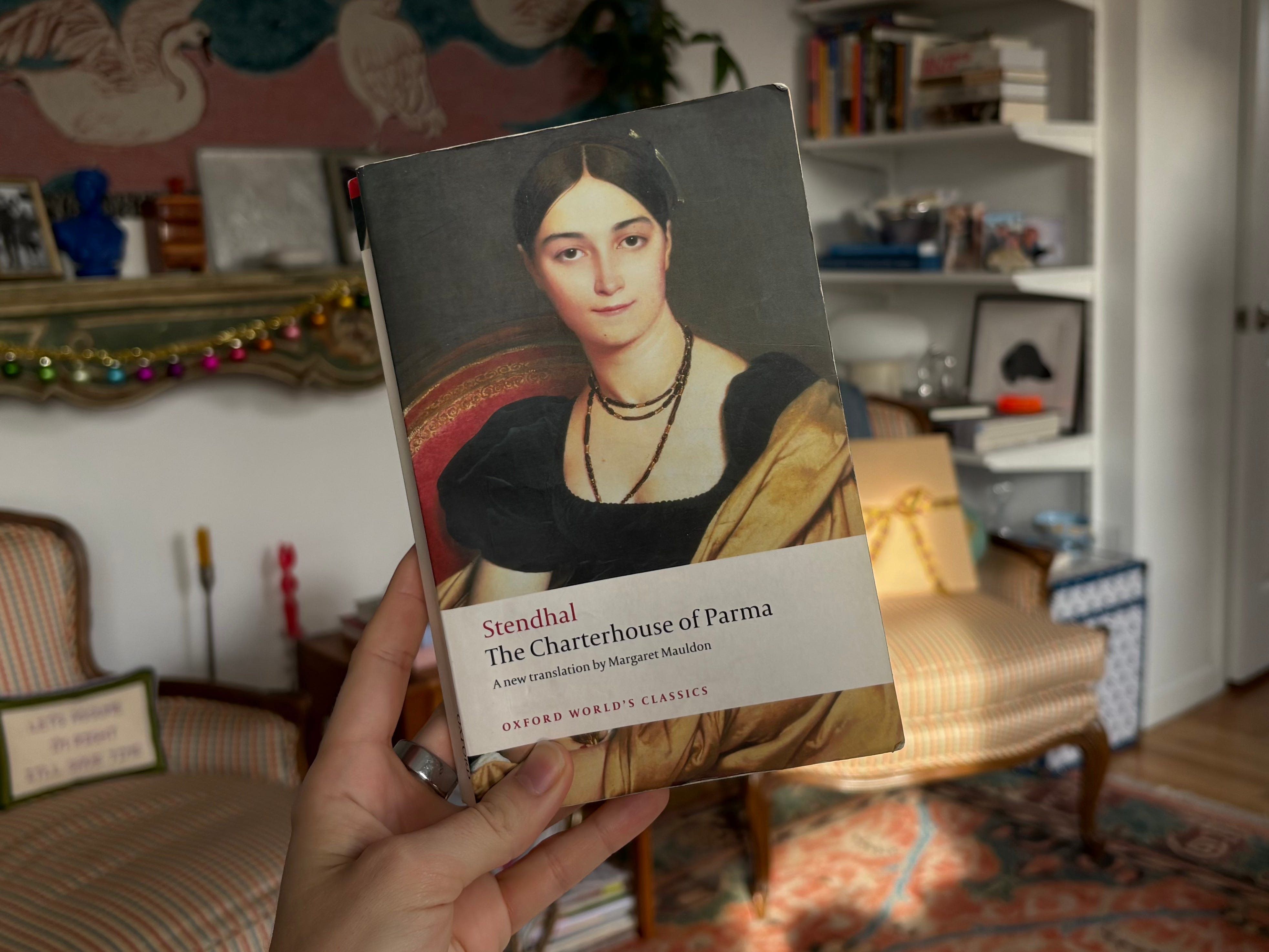
I blew through it at such alarming speed because it’s so fantastically entertaining. It is set in Italy during the years following the French Revolution and primarily follows the lives of a young nobleman, Fabrice del Dongo, and his paternal aunt, Gina. The action eventually centers itself in Parma, in the fictional court of Prince Ranuce-Ernest IV. There, Gina holds great sway as the beautiful and clever mistress of Prime Minister Mosca. Through advantageous marriage, she becomes a duchess, and develops great plans to advance her nephew—who she loves perhaps more than an aunt should love her nephew. Everything goes off the rails when Fabrice kills a traveling actor in self-defense and the Duchess’s enemies identify a weakness that they can exploit to bring about her downfall.
But that’s getting ahead of myself—the action really kicks off when a seventeen year old Fabrice, with no military experience whatsoever, decides to join Napoleon’s army. Yes, he begins how he means to continue—romantic, idealistic, and naïve. From this point forward, he is in and out of disguise and in and out of prison too. He has a strong sense of right and wrong, but barring the introduction of a plan that offends that sense, he trusts completely the judgement of his aunt and Mosca when it comes to navigating the intrigues of the court.
The court is portrayed as a force of degradation, and the reader is made to understand that Fabrice’s high level of trust (and resultant lack of participation in the making of his own destiny) stems just as equally from familial love as it does from a genuine disinterest in playing the games that must be played. He is more concerned with his inner life. He reflects that in his life he has only experienced passing fancies, tiring of the beautiful women he woos after a short time. He comes to believe that he’s not capable of real love, which greatly disturbs him, though he tries to accept it. When love does eventually come for him, it is in the least likely of circumstances, and will upend his life and the lives of all who love him.
It’s a lengthy novel and though romance and adventure abounds, it also requires a high level of attention to keep track of the various characters, their aliases, false passports and disguises, their servants and assassins, their double crosses and foiled plans. Most of the time, it was a genuine pleasure to follow along with the duchess’s scheming. Through some of the lengthier tangents into what Stendhal refers to generally as “politics,” it was his narrative voice that kept me totally engaged. His language and tone are at once flowery and matter of fact, winking with humor, and a disarming familiarity.
No spoilers, but the ending is wildly abrupt. After spending 500 pages sparing no detail, Stendhal fast forwards three years (literally: “At this point I will ask my readers’ permission to pass in silence over a period of three years.”) and wraps up in a matter of four or five pages. Whether this was part of the plan or he was just on deadline I couldn’t say, but it certainly produces an interesting effect. I am still thinking about what exactly that effect is…
Nonetheless, The Charterhouse of Parma was my favorite of the month—highly recommend!
It sounds like you had a good reading month! Out of curiosity, are you avoiding reading about books you don’t already have, e.g. new releases?