
Last Month's Reads
May 2026

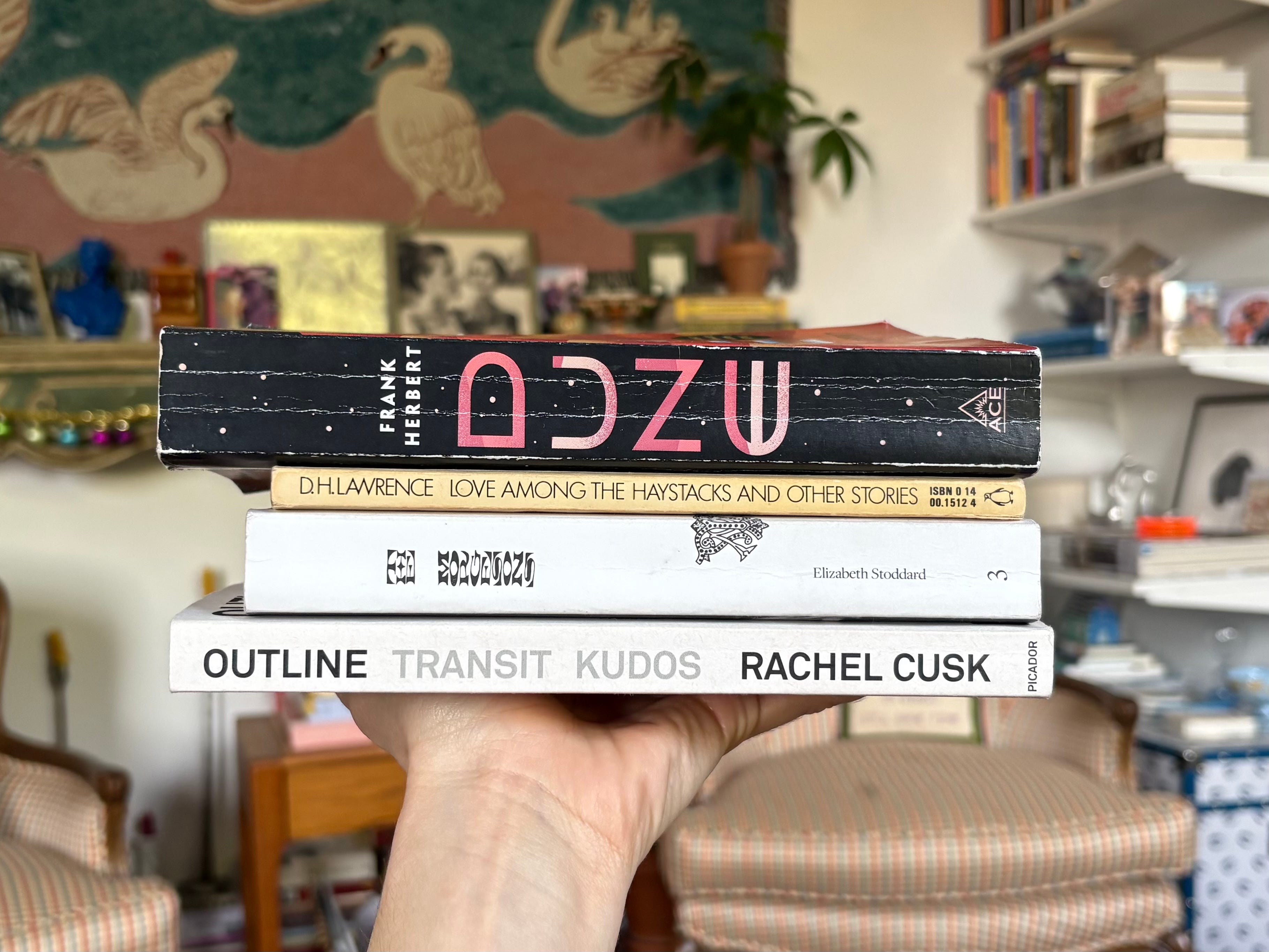
As I trudged through the final pages of Lies & Sorcery at the end of April, I knew I would have to pick my next read carefully, or else face the consequences (despair, reading slump, existential crisis, etc.). I laid on the couch with that tome weighing on me (literally) and stared up at my bookshelf with weary eyes. I needed something that would grab me, enchant me, ideally make me forget that I was reading at all. Something with a Plot. Why do I own so many apparently Plotless novels? I scanned my shelves in mounting terror until, like a prayed for sietch on the sand planet itself, DUNE emerged from the haze to save me.
That’s right, dear reader, last month, in what can only be described as total desperation, I finally got around to reading Dune by Frank Herbert. Now I know what you’re thinking, because apparently this is what popped into everyone’s mind minute he or she heard (or saw) that I was reading Dune: it’s some variation of I didn’t know you liked sci-fi, or I don’t really read sci-fi, or do you read a lot of sci-fi. My response(s)? I don’t particularly, me neither, and no, obviously not you imbecile; if I read a lot of sci-fi, surely I would have already read DUNE, which, according to many, is the greatest sci-fi novel ever written.
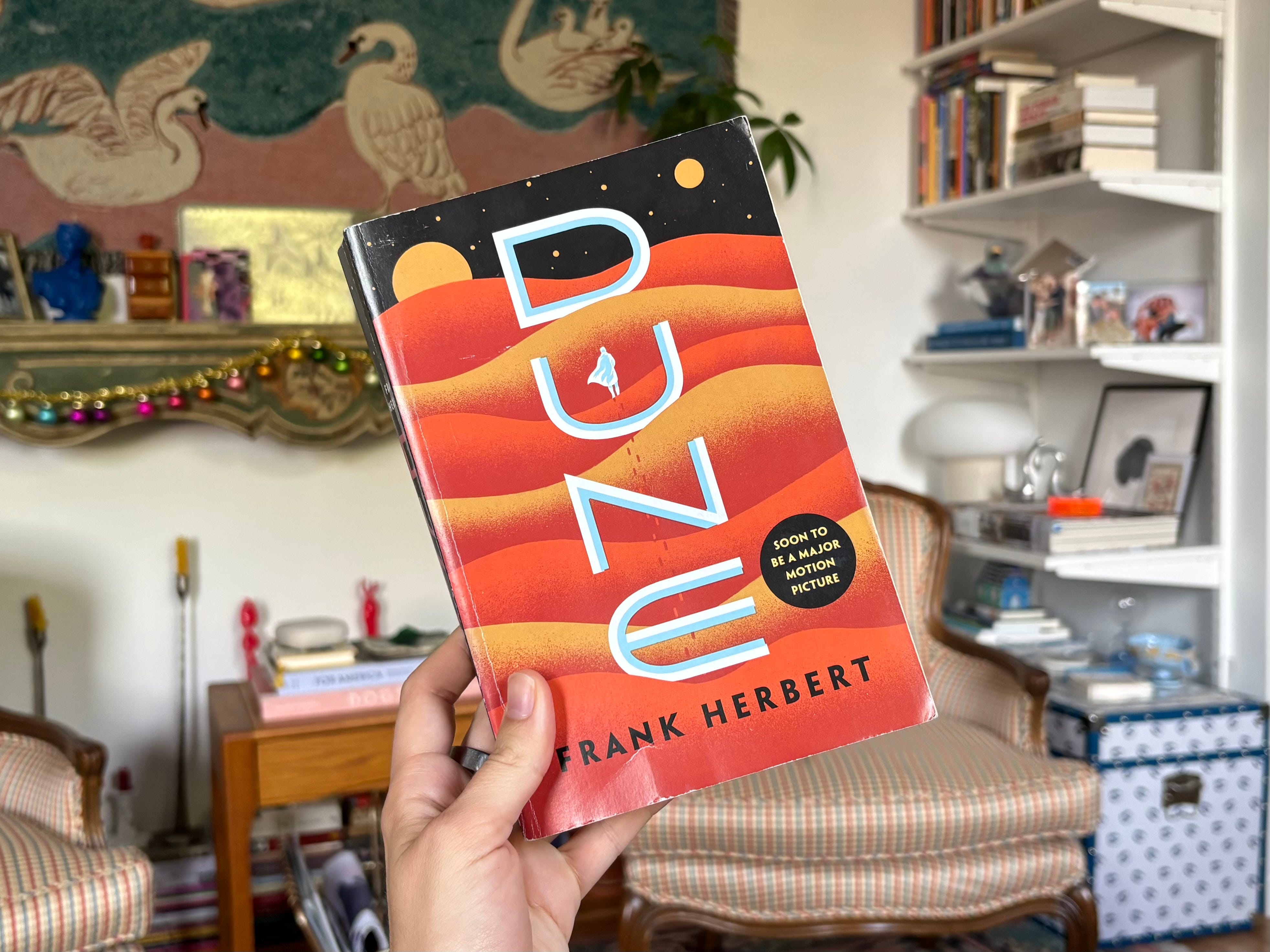
I don’t feel qualified to pass a judgment of that nature (given my still limited exposure to the genre), but I can say that Dune was exactly what I needed. For those unfamiliar, this is the story of Paul Atreides. When his father, Duke Leto, is ordered to abandon their home planet (earth-like vibes) to rule over Arrakis (inhospitable desert vibes, no water, literally enormous sand worms, hostile population, but also this addictive and highly valuable drug called Melange and/or ‘spice’ that increases cognition and lifespan) the family packs up and ships out.
Intrigue abounds. There’s the Padishah Emperor, the Landsraad (which includes House Atreides and BAD House Harkonnen), and the Spacing Guild all vying for power in a precariously balanced triumvirate. The Bene Gesserit (the quasi-religious, very powerful, witch-vibe order of women to which Paul’s mom Lady Jessica belongs) are also doing stuff as are the FREMEN out in the desert. It’s really way to much to get into. The long and short of it is that everyone is lowkey evil except for the Fremen and Paul. Paul might be the Fremen’s messiah (the Lisan al-Gaib), which is kind of the same thing but not necessarily as the Bene Gesserit’s Kwisatz Haderach. TBQH it’s all pretty confusing, but Paul has to save the world (Arrakis) and maybe the whole universe.
As is common in sci-fi (I think, LOL), Herbert uses his imaginary world to explore ~themes.~ Unlike literary fiction, you don’t have to read between the lines to figure out that blue curtains mean sad or whatever. Herbert is pretty clear about what he wants you to be thinking about—and much of it is eerily relevant sixty years later. Before page 20, he hits us with this banger: “Once men turned their thinking over to machines in the hope that this would set them free. But that only permitted other men with machines to enslave them.” In addition to the dangers of technology, he’ll have you thinking about well…the dangers of everything else too (complacency, comfort, blind faith, ecological destruction, etc.).
If that sounds good to you, you’ll love Dune. If that sounds boring (or stressful?) to you, I totally get that, and the good news is that you can still enjoy Dune without reading it as an allegory—the story is that good! I was totally swept up, as my lover can attest—he was subjected to nightly recaps on what had happened “today in DUNE.” Jury is still out on whether I will read Dune Messiah. I don’t own it, but since the Timothée movie version comes out in December, I feel like maybe I should break my rules to get a copy? Robert Pattinson will be in the movie <3 Any Dune Messiah fans out there, weigh in, thank you.
Coming off that high, I thought something a little mellower, a little less all-consuming might do the trick. Back in April, I picked up two books off the street that I never told you about. This is technically a violation of my policies, but we aren’t going to dwell on it since no money changed hands. Anyway, one of the books I scurried home with that day was Love Among the Haystacks and Other Stories by D.H. Lawrence, and now it called to me from my shelf like all new books do: read me! read me! The little Penguin edition I found contains just 6 tales, which frankly is a good number for someone like me who doesn’t always get the appeal of short story collections.
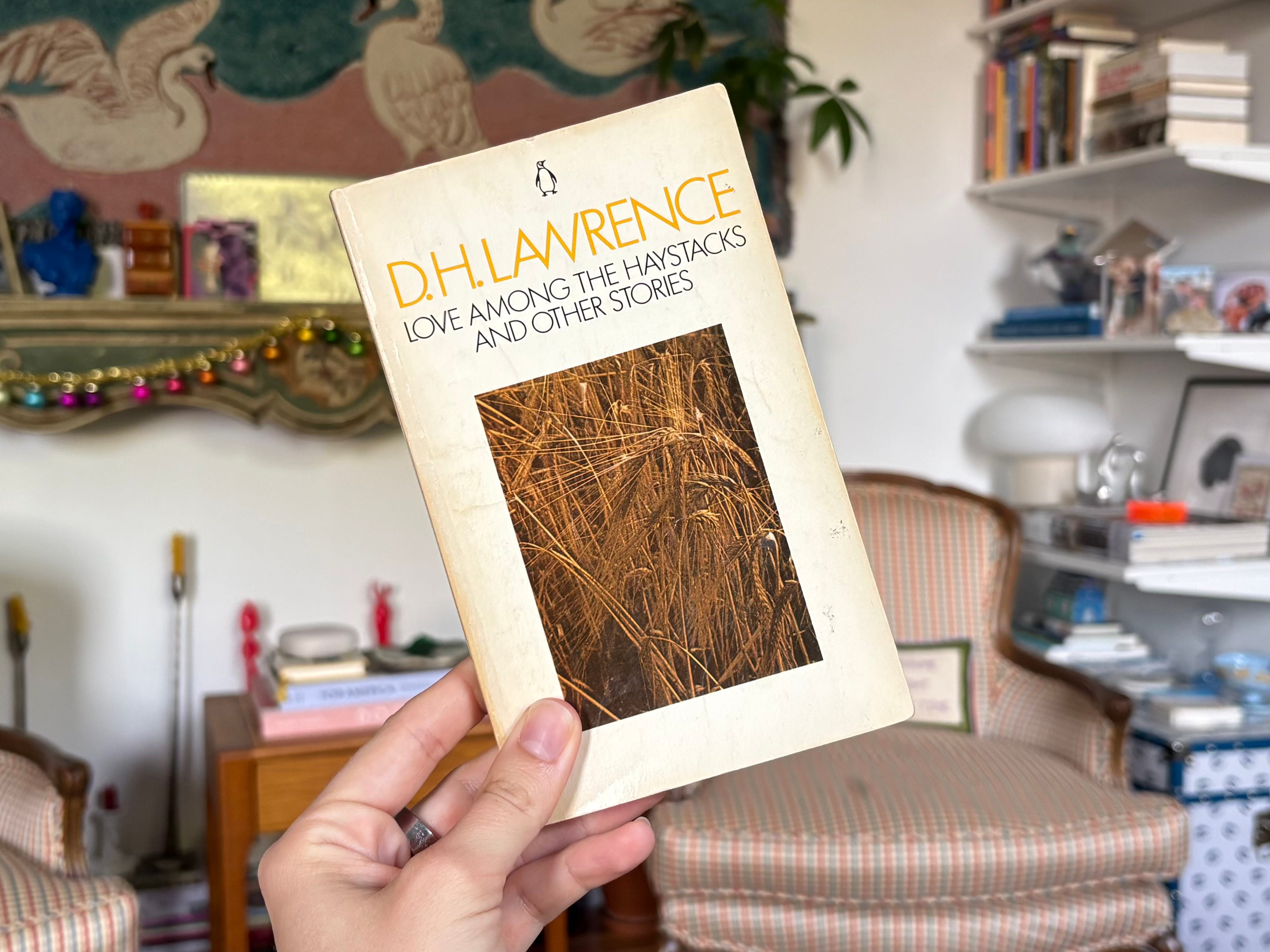
The titular story, “Love Among the Haystacks,” is the tenderly told tale of two brothers’ first encounters with love set against the hay harvest in rural England. Maurice has fallen in love with Paula, the German governess from a neighboring farm, and he arranges for her to come to him in the night—volunteering to be the one among the crew who stays overnight to guard the hay. Geoffrey, the shyer more introspective of the two feels left behind and lonely in light of his brother’s budding romance. In payment for his private resentments, he offers to stay with Maurice overnight as well, and ends up getting a taste of romance as well when the neglected wife of a gypsy tramp wonders into his camp.
“Love Among the Haystacks” seemed most similar to Lawrence’s usual style and subject matter (judging from my limited experience with Lady Chatterley’s Lover). He finds the encroachment of modernity alarming, and he’s interested in the romantic and sexual impulse—the way that it manifests differently, but ideally symbiotically, in men and women.
My favorite story in the collection was “The Rocking-Horse Winner” which is about Paul, a young boy growing up in a middle-class family plagued by financial anxiety. Appearances must be kept up, and the walls seem to whisper “there must be more money!” Paul learns about horse racing from the gardener Basset, and develops a strange knack for knowing which horse will win (without ever visiting the track mind you). When he knows, he asks Basset to place a bet for him, and in this way builds up a nice little fund. The ending totally shocked me in that way that only successful short stories can.
I can’t seem to find the specific collection that I have anywhere online, but if you read one or two stories, I’d seek out the aforementioned two. The others were good too if you stumble upon them—one called “The Lovely Lady,” about a poisonously possessive mother, “Rawdon’s Roof” about a selfish and foolish philanderer, “The Man Who Loved Islands,” which reads like a parable, and “The Man Who Died,” which is a kooky retelling of Jesus’s resurrection (namely what happens after the resurrection) that didn’t really hit with me.
The month burned on. I had recovered from my desert fever with Lawrence, but decided I wanted to go backwards from him for my next read instead of forwards into something more contemporary. It was time for The Morgesons by Elizabeth Stoddard, brought out by none other than the Mandylion Press ladies. It’s starting to feel like I talk about Mandylion nonstop, but what can I say, I love their work!
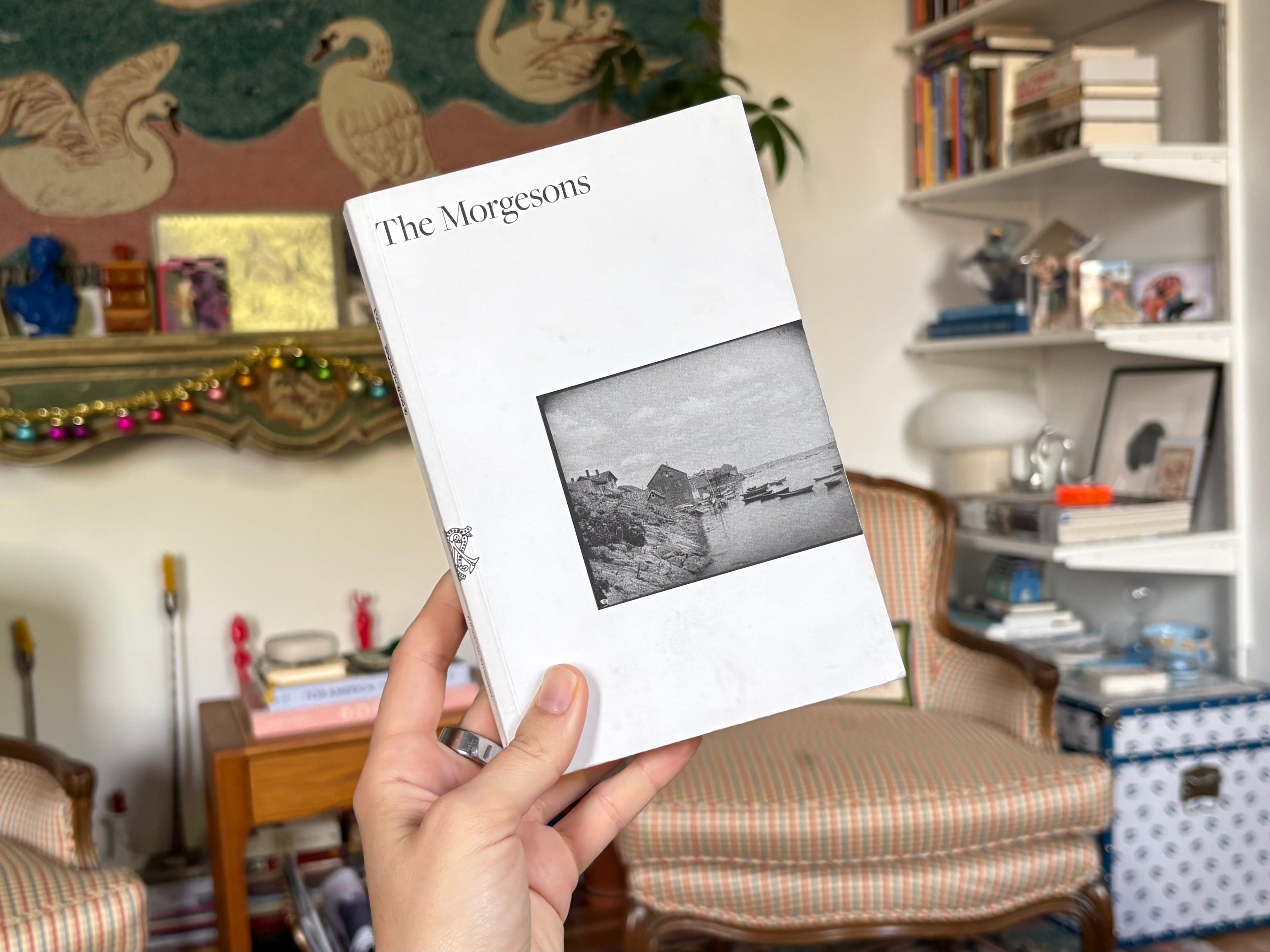
To begin, I don’t think I’ve ever read anything quite like The Morgesons. The premise sounds somewhat simple: it’s a coming of age story set in small town New England in the nineteenth century. We are introduced to the Morgesons—with deep family roots in New England, Locke Morgeson runs a successful whaling business, and his wife Mary runs runs a house. The novel focuses on their daughters, Cassandra and Veronica, as they traverse their adolescence and become women. Cassandra is our narrator, so we are most with her, but Veronica serves as her double and her opposite.
Where Cassandra says whatever comes to her mind, Veronica speaks very little, and when she does, it always seems to be in riddles. Where Cassandra is hearty and solid, Veronica is plagued by mysterious bouts of illness that keep her laid up in bed for months at a time. Where Cassandra is sent out into the world—first to school and then on extended family visits—Veronica wouldn’t dream of leaving home. It is out in the world the Cassy gets her first (and second and third) taste of love. She even brings some love home for Verry.
What makes The Morgesons so unique is that Stoddard leaves so much unsaid and unexplained. I’m used to this to some degree when it comes to nineteenth century novels—I know that no one is ever pregnant, the babies just appear—but The Morgesons takes this decorum to the next level, or at the very least, its abstentions are more noticeable because it’s narrated by Cassy herself in the first person. I LOVED IT. More intrigue in novels, more inference and conjecture. More using your brain to follow the narrative thread, more saying “OH okay, they’ve clearly been going on carriage rides without my knowledge and now he loves her,” you know what I mean??
I don’t want to give anything else away, but this book was so good. It’s all about a woman’s place in the world—how to resist when someone tries to put you in it, AND how to find it for yourself. It’s also soooo romantic. 10/10, I loved The Morgesons, my favorite book of the month and I can’t wait to reread it.
I wrapped that right before a Memorial Day trip to New Orleans (where I knew I would get zero reading done), and wasn’t expecting to fit in another book before the end of the month. I was kind of directionless in terms of what to read next, and picked up Outline by Rachel Cusk on whim. It’s not very long, but I ended up finishing it much more quickly than I expected (it’s essentially plotless, which can make for slower reading).
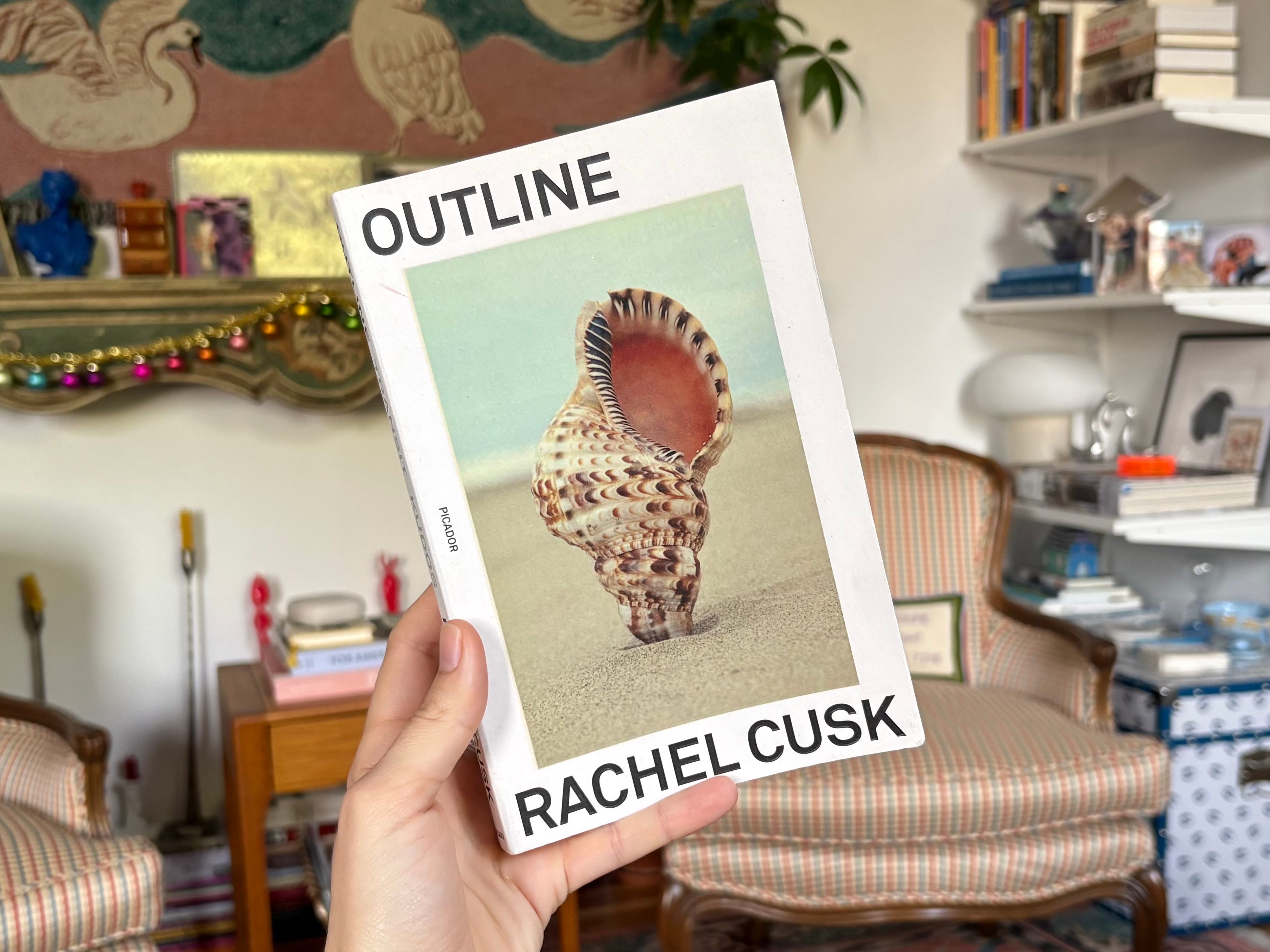
The novel follows an unnamed writer in sweltering Athens for the summer to teach a creative writing course. It begins on the airplane to Greece, when the man in a neighboring seat strikes up a conversation. As he speaks, he reveals much about himself—as much in what he does say as in what he doesn’t—and our writer listens. We will learn that she has a knack for listening over the course of the novel, which is made up of ten chapters, each one grounded by its own central conversation. Colleagues, old friends and students talk and talk, and we as the reader (inside the mind of our great listener) have a front row seat to the ways in which people construct and project their identities.
The writer—we eventually learn that her name is Faye—on the other hand seems to operate outside these normal patterns. Like many great listeners, she reveals very little about herself, and it’s only seemingly against her will that the outline (ha ha) of her life (two children, recent divorce, deep sense of loss) does take shape. Of course, the notion that she’s somehow immune from the impulse for self-articulation and projection that the other people she encounters cant seem to escape is an illusion. The whole novel is a manifestation of her inner life.
Cusk’s use of free indirect speech—in which the majority of the dialogue (a fair amount considering how heavily the novel relies on conversation) is reported in Faye’s own words, rather than as transcribed quotations—gives Faye away. Even though we know very little about her, we somehow feel that we do. In the stories she tells about those around her, she, perhaps inadvertently (subconsciously?) reveals her own fixations: difficult family dynamics, difficult marriages, difficult childhoods, to name a few.
To be honest, I thought I was kind of neither here nor there on the whole thing while I was reading it—though I did read the back 2/3 in basically one sitting laying out by the Hudson on Sunday, so obviously I liked it well enough. The writing is strong, the voice curiously compelling, but on the whole, the book didn’t provoke strong feelings while I was in the midst of it. However, since I finished reading it and the more I think about it, I like it more and more, and I consider it to be a more and more impressive feat of writing.
Has anyone read Transit or Kudos? Should I?
That’s all for now—ta ta!
I fully relate to the post book slump and the dire need to squash it before it arrives. I find it very funny that Dune saved you, as it cursed me to a 2 month reading slump when I read it. What wonder. Great reviews as always!
The Outline trilogy is definitely a right place, right time kind of experience. They are so different from anything else I have ever read and even though they are not exactly a joyful experience, they truly put you in such a Faye mind space, it’s uncanny. I reread them all earlier this year and I was laughing at myself recently because I was describing to myself what it’s like to be a writer sometimes… how you are not necessarily the most exciting person in the world but people seem to make themselves visible to you… like you are their mirror…and then I realized I was totally just describing the Cusk novels 🤭🤭 I think Kudos, the third book, is my favorite.