
Last Month’s Reads
March 2026

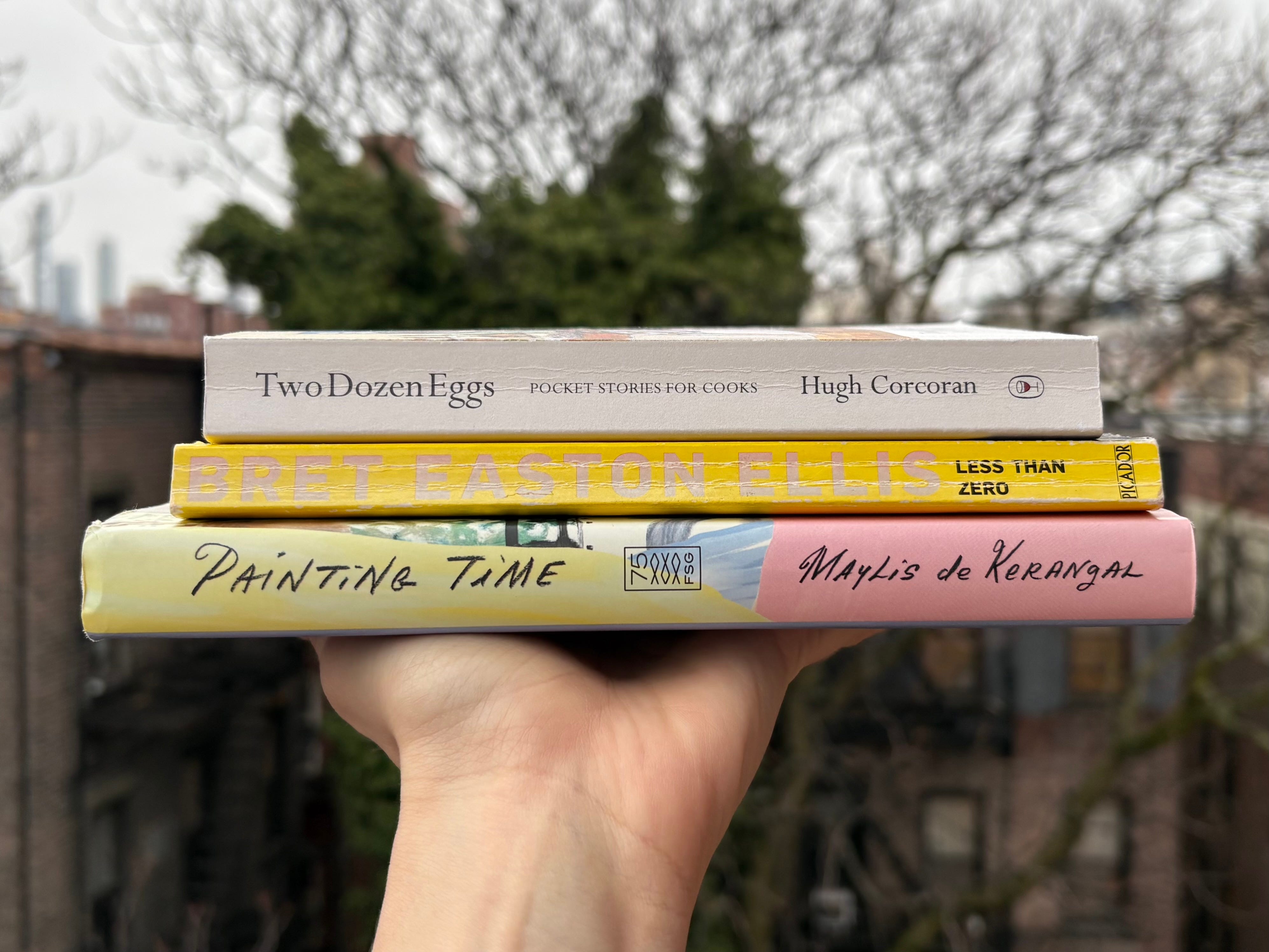
March was a slow-ish and random month for reading as you will soon see. I didn’t get through much, and what I did get through was thematically…disparate. I mean to continue my downward trajectory (from eight books in January) as I started Lies and Sorcery (long) and will likely be reading it through the end of the month. But that’s getting ahead of ourselves. First, three little March reviews.
I don’t remember why I decided on Painting Time at the beginning of the month. I finished Parma, so something shorter and something modern seemed like the ticket. I am learning through my little no new books exercise that my reading is often reactive—I rarely read two similar books in a row, even if I loved the first. Good things must be spread out. And Maylis de Kerangal is a good thing. I read The Cook by her a couple years ago and loved her depiction of total devotion. I picked up Painting Time second hand shortly after, knowing that I would eventually get around to it, then never did until now.
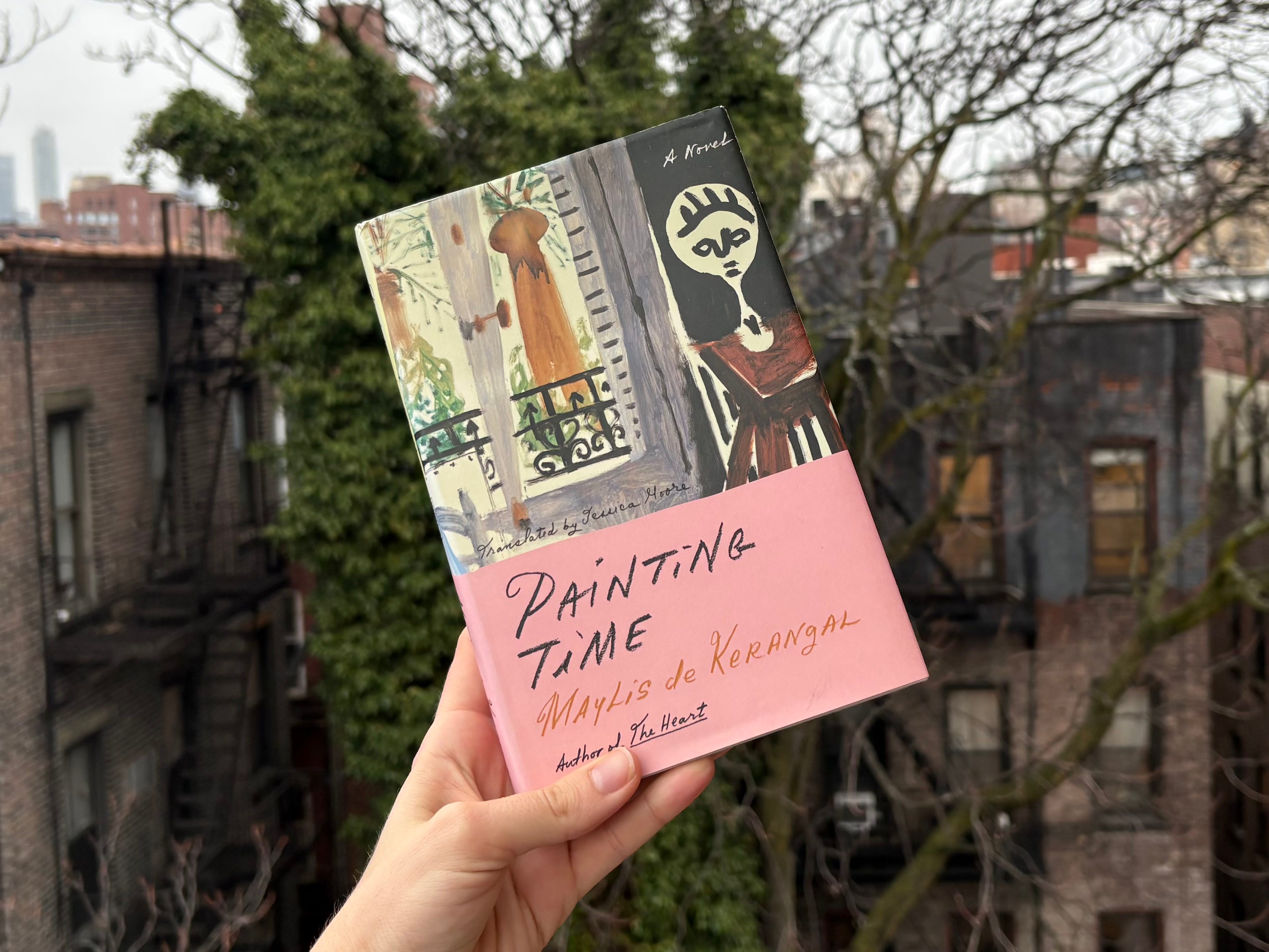
Where The Cook portrayed a young man’s almost compulsive commitment to the craft of cooking, Painting Time takes as it’s subject, yes you guessed correctly, painting, and takes as it’s protagonist a young woman named Paula. Paula is 20 and directionless (an “impetuous dabbler) when she decides to enroll herself at the Institut de Peinture in Brussels. This is not your typical art course, something she has already dabbled in. Instead, it is the Mecca of decorative painting, or trompe-l’œil—painting to deceive the eye. Paula is told in her interview that the course is six months of “intensive practical training” during which she will “delve into the very matter of nature, starting with wood, moving to marble, into semi-precious stones, then finally drawing in perspective, gilding, silver plating and commercial lettering.
The novel follows her through her training, which turns out to be grueling, and into her early career, which at first is non-existent. The course at the Institut gave Paula direction—something to dedicate herself to if only because she was so busy she didn’t have time to think about whether she should dedicate herself to it—but after she receives her diploma and returns home to her parents’s apartment in Paris, “her rhythm is broken.” Luckily a pregnant downstairs neighbor, possibly at the prompting of Paula’s solicitous parents, wants the ceiling of her soon-to-be nursery painted like the sky.
As soon as Paula begins, she is cured of her listlessness, wherein lies the central theme of the novel: art should be made for the sake of making it, without grand artistic intentions, or grand artistic pretensions. Doing it is enough (doing it well, of course), and is largely the whole point. By choosing painting as her artform, de Kerangal is able to put the beaux arts and it’s abstracted museum-housed descendants on one side of the coin, and what Paula chooses to do, paint for work, on the other. She argues in the end that the work is the purer form, if not of art, then at least of love.
I love the way de Kerangal writes. She has this third person narration style that is simultaneously aerial and internal. She writes in the present tense, which makes it feel like you’re watching a movie, and her oscillation between laser focused action reportage and dreamy fragmented memory turns the movie into a documentary. This was my favorite book of the month!
After I finished it, I started reading Two Dozen Eggs before bed. It’s a charming collection of stories, each of which has a corresponding recipe, but before I tell you about it, I’m going to tell you about Less Than Zero, which I started in the middle of Two Dozen Eggs because I wanted a longer story with my short stories. Back in January, I read EJ Johnson’s primer on Bret Easton Ellis and thought to myself, you know, I really don’t know if this is for me, but I do own Less than Zero, so I could find out. Since January, it’s been on my shelf, but in a special position that indicates “maybe read me sooner than all these other books you also haven’t read,” so I did that. Reader, it’s not for me.
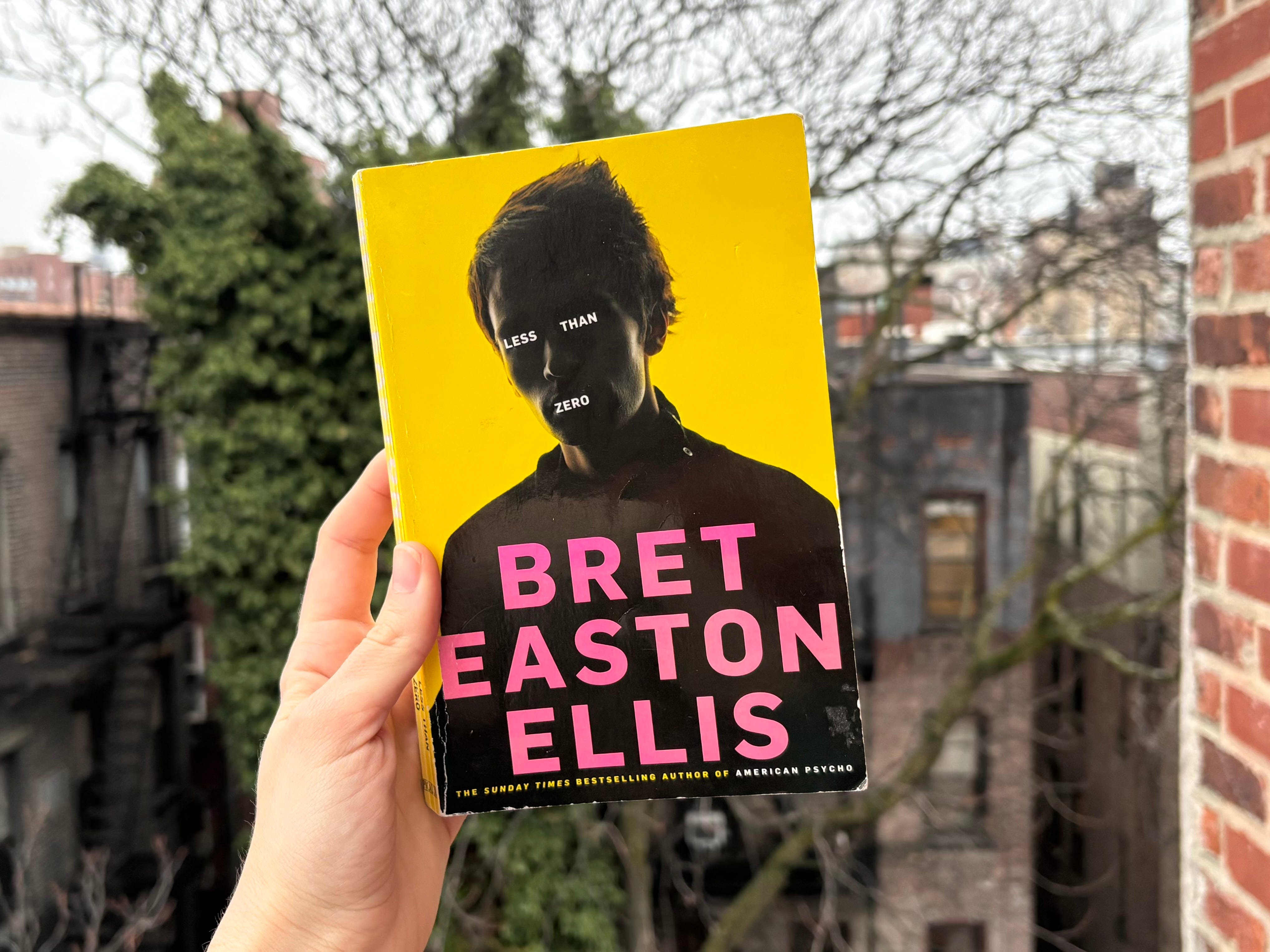
Clay is an eighteen year old college student back from school in New Hampshire to spend the holidays at home in 1980s Los Angeles. His parents are divorced, which means his dad lives in an apartment in Studio Ciry and his mom lives in a pharmaceutical haze. Neither one pays much attention to him, and so he galavants around the city doing drugs with his friends, none of whom really seem Like real friends. Galavant isn’t the right word though, because that makes it sound fun. No one is having much fun.
The style is very diaristic, told in short matter-of-fact fragments. For example: “I wake up sometime before dawn. My mouth is really dry and it hurts to unstick my tongue from the roof of my mouth,” of “Trent calls me the next night and tells me that he’s feeling depressed and doesn’t have any more coke, can’t find Julian; having problems with some girl.” Clay is detached, only occasionally revealing his thoughts or feelings, but mostly just reporting the facts.
It’s not hard to imagine that the novel started as a handful of journal entries that Ellis submitted as part of his college admission application, which it did. His freshman year creative writing professor passed them along to a Simon & Schuster Editor, who was interested. Over the next three years, Ellis continued fleshing out the novel using scenes and stories from his own experience partying in L.A. Less Than Zero was published before Ellis graduated college.1
I can understand why people like Ellis’s style, and even more how this particular first novel took the literary world by storm. I think there’s always something compelling about unsupervised and misbehaving teenagers, and underneath the hopelessness and depravity, Ellis weaves in a palpable tenderness for Clay, or at least invokes it in his reader. It wasn’t as gratuitously violent or as pointlessly shocking as I expected it to be, but when Ellis wants to horrify, he horrifies, and ~3 truly stomach turning scenes is 2.5 too many for me.
Once I was about halfway through Less Than Zero, Two Dozen Eggs got put on pause. Well, I can’t tell you how glad I was to be able to recenter Hugh Corcoran’s world after escaping Ellis’s. Of course both of their worlds are really just our world, but Corcoran has a knack for balancing misfortune and mundanity, which are both ever-present in his stories, with a gentle and curing gratitude. I found Two Dozen Eggs at Three Lives at Christmastime and immediately bought all three copies they had in stock; one for my mom, one for Kathryn, and one for me.
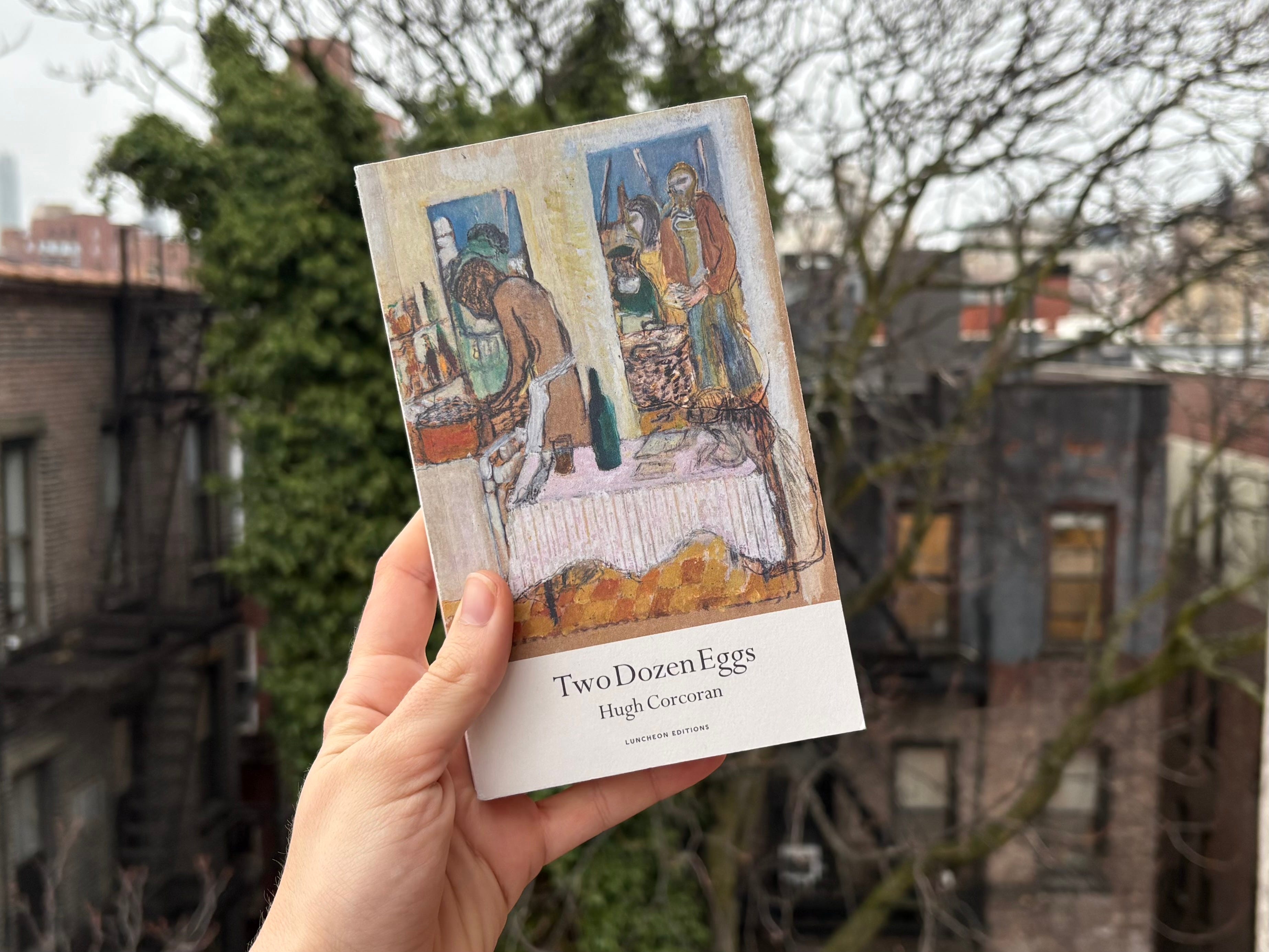
I say it’s a collection of short stories, which it is, but the stories are really very short, more like character sketches than anything else. Corcoran was inspired by real people he’d encountered across his travels through Ireland (his home country), France and the Basque Country. The people he portrays are simple folk, mostly middle-aged or older, often a bit lonely, but when they cook, or even just prepare to eat, they are uplifted, transformed. Each little story is followed by a no recipe recipe, so that you too can make stuffed snails or chicken in aspic and be transformed.
Sally Finnegan is turning 87, and doesn’t have a large appetite anymore. When asked by her daughter what she’d like to eat on her birthday, she thinks a boiled egg sounds nice. Her daughter ignores her, but she’s made herself hungry for a boiled egg, which she prepares while reminiscing on her childhood in the French countryside—running out to the chicken coop in the morning to fetch warm eggs in for breakfast.
Monsieur Fourcade is poor and alone. He buys bulk rice and beans from the local Indian and North African grocers and farms a small plot of land for his vegetables. He befriends Claire, a young woman who runs a wine store (one of the few extravagances Monsieur Fourcade allows himself). When she invites herself over for lunch unexpectedly, he doesn’t have much on hand, but whips together a riz pilaf and runner beans in garlic and chili.
I am a firm believer in the power of a good meal, and Corcoran captures the magic over and over again. A chef himself, he writes well about food—convincing you that it’s not so complicated to prepare, in fact it’s all very intuitive. Impressively, he writes just as well about people, and in his sympathetic hands, the most ordinary people become the most interesting. He sums it up nicely in the acknowledgments: “This book is a memory of all the characters that I have met in my life, and in this age of homogenization being a character is more important than ever.”
A slow but intentional reading month is better than no books at all! I can understand your struggle with Ellis, I feel it is very particular. But I’m very intrigued by the others. They might have to go on my ever expanding tbr haha.
hahahah omg nooooo I am so sorry you hated Less Than Zero, but I really appreciate that you tried! It’s a lot, I agree, and I get why it’s not for everyone. Our tastes align somewhat though because I read Painting Time and loved it, too! Such a strange, specific piece of the art world— as a painter myself (though not so esoteric as Paula), and someone who almost went to art school, I really enjoyed this, though I wasn’t sure it would be widely appealing. I’m so glad to have found someone else who enjoyed it!